The Department of Business and Professional Regulation | Certified Contractors
Jun 27, 2026
Florida DBPR Explained: Everything Every Contractor Needs to Know Before Getting Licensed
Understanding the Florida Department of Business and Professional Regulation (DBPR)
If you're planning to become a licensed contractor in Florida, one organization will play a major role throughout your career: the Florida Department of Business and Professional Regulation (DBPR).
Whether you're applying for your first contractor license, taking your state examinations, qualifying a business, renewing your license, or verifying another contractor's credentials, the DBPR serves as the primary regulatory authority responsible for overseeing licensed construction professionals throughout the State of Florida.
Understanding how the DBPR operates is essential for anyone pursuing a Florida General Contractor License, Building Contractor License, Residential Contractor License, Roofing Contractor License, Plumbing Contractor License, Mechanical Contractor License, or any other certified contractor license.
What Is the DBPR?
The Florida Department of Business and Professional Regulation (DBPR) is the state agency responsible for licensing and regulating dozens of professions throughout Florida.
Within the construction industry, contractor licensing is administered through the Construction Industry Licensing Board (CILB), which operates under the DBPR.
The Construction Industry Licensing Board is responsible for:
-
Issuing contractor licenses
-
Reviewing license applications
-
Approving qualifying agents
-
Administering contractor regulations
-
Investigating complaints
-
Enforcing Chapter 489, Florida Statutes
-
Overseeing license renewals and continuing education
The purpose of the DBPR is not simply to issue licenses—it exists to help protect the public by ensuring that licensed contractors meet Florida's standards for experience, competency, financial responsibility, and professional conduct.
Why the DBPR Is Important
Every certified contractor licensed in Florida answers to the DBPR.
When you become licensed, you are granted the privilege of performing regulated construction work throughout the state, but that privilege also comes with ongoing responsibilities.
The DBPR oversees areas including:
-
Initial licensing
-
License renewals
-
Continuing education
-
Financial responsibility
-
Business qualification
-
Complaint investigations
-
Disciplinary actions
-
License status changes
As a licensed contractor, maintaining compliance with DBPR regulations is part of protecting both your business and your professional reputation.
The Construction Industry Licensing Board (CILB)
The Construction Industry Licensing Board is the division of the DBPR that specifically regulates Florida contractors.
The Board establishes licensing standards, approves applications, adopts administrative rules, reviews disciplinary matters, and ensures that contractors continue to meet the legal requirements established under Florida law.
The CILB oversees numerous contractor classifications, including:
-
Certified General Contractor (CGC)
-
Certified Building Contractor (CBC)
-
Certified Residential Contractor (CRC)
-
Certified Roofing Contractor (CCC)
-
Certified Plumbing Contractor (CFC)
-
Certified Mechanical Contractor (CMC)
-
Certified Air Conditioning Contractor (CAC)
-
Pool Contractors
-
Specialty Contractors
These licenses allow qualified professionals to legally perform work within the scope authorized by Florida law.
What Does the DBPR Require Before Issuing a Contractor License?
Before issuing a certified contractor license, the DBPR requires applicants to satisfy several important requirements.
Depending on the license classification, applicants may need to demonstrate:
-
Qualifying construction experience
-
Supervisory experience
-
Successful completion of the required state examinations
-
Financial responsibility
-
Good moral character
-
Proper application documentation
The department reviews each application individually to determine whether the applicant meets Florida's licensing standards.
Your Relationship with the DBPR Doesn't End After Licensing
Many students believe their interaction with the DBPR ends once they receive their contractor license.
In reality, your relationship with the department continues throughout your career.
Licensed contractors will continue working with the DBPR for:
-
License renewals
-
Continuing education reporting
-
Business qualification changes
-
Address updates
-
Additional license classifications
-
Qualifying additional business entities
-
License verification
-
Maintaining active status
Understanding these ongoing responsibilities is part of being a successful contractor.
How to Verify a Florida Contractor License
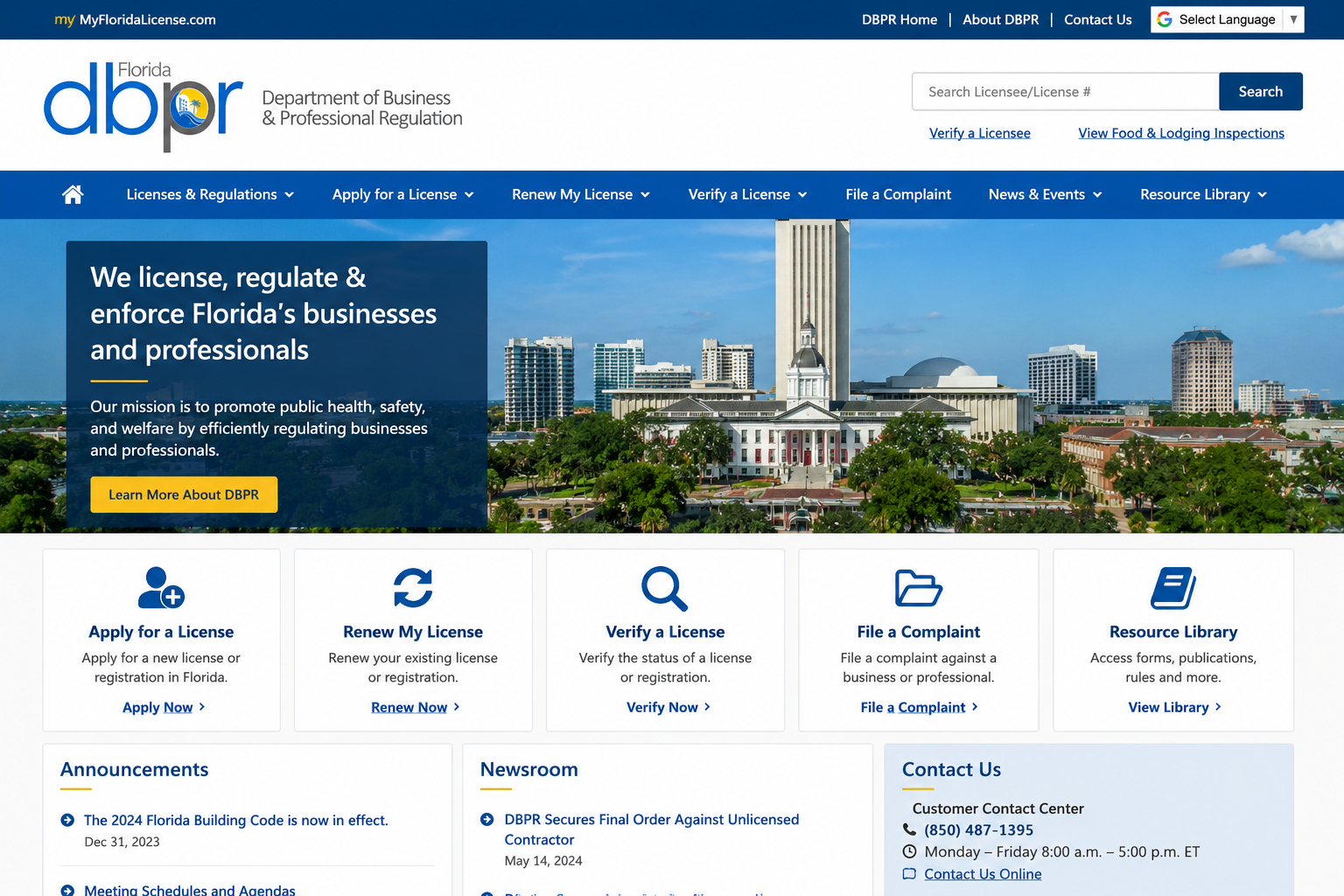
One of the most valuable tools provided by the DBPR is its public license verification system.
Homeowners, business owners, building departments, subcontractors, and contractors can verify whether a license is current and active before beginning a project.
The official Florida license search allows users to search by:
-
Contractor name
-
License number
-
License type
-
City or county
If you're hiring a contractor—or if you want a customer to verify your own credentials—you can use the official DBPR License Search here:
The search results display information such as:
-
License classification
-
License status
-
Expiration date
-
Business qualification information
-
Public disciplinary information (when applicable)
This resource helps protect consumers while promoting transparency throughout Florida's construction industry.
Why Every Contractor Should Understand the DBPR
Many applicants focus exclusively on passing the contractor examinations.
Passing the exams is only one step.
Successful contractors also understand:
-
Florida licensing laws
-
Professional responsibilities
-
Continuing education requirements
-
Business qualification rules
-
Ethical obligations
-
Regulatory compliance
Learning how the DBPR operates will help you maintain your license, avoid unnecessary delays, and build a successful long-term construction business.
How Elite Contractor Coaching Can Help
Navigating the licensing process can feel overwhelming when you're completing the DBPR application for the first time.
At Elite Contractor Coaching, we help students understand:
-
Which contractor license best fits their goals
-
DBPR application requirements
-
Experience verification
-
Examination preparation
-
Business qualification
-
Continuing education requirements
-
Long-term licensing strategies
Our goal is to simplify the licensing process so you can focus on what matters most—building a successful career in the construction industry.
A Florida contractor license represents more than passing an examination. It is the beginning of a professional career governed by standards designed to protect the public and elevate the construction industry.
Understanding the DBPR is one of the first and most important steps toward becoming a knowledgeable, respected, and successful Florida contractor.